What is meme marketing?
Meme marketing is using a recognisable internet joke format, such as an image with a caption, a reaction GIF, a trending audio clip or a "POV" video, to say something about your brand, product or customers. The format does the work: people already know how the joke goes, so your version reads in a second.
Memes sit at the light end of social media content. They are not a strategy on their own. They are a way to show personality and reach people who would scroll past a standard promotional post, inside a wider plan that still includes product posts, reviews and offers.
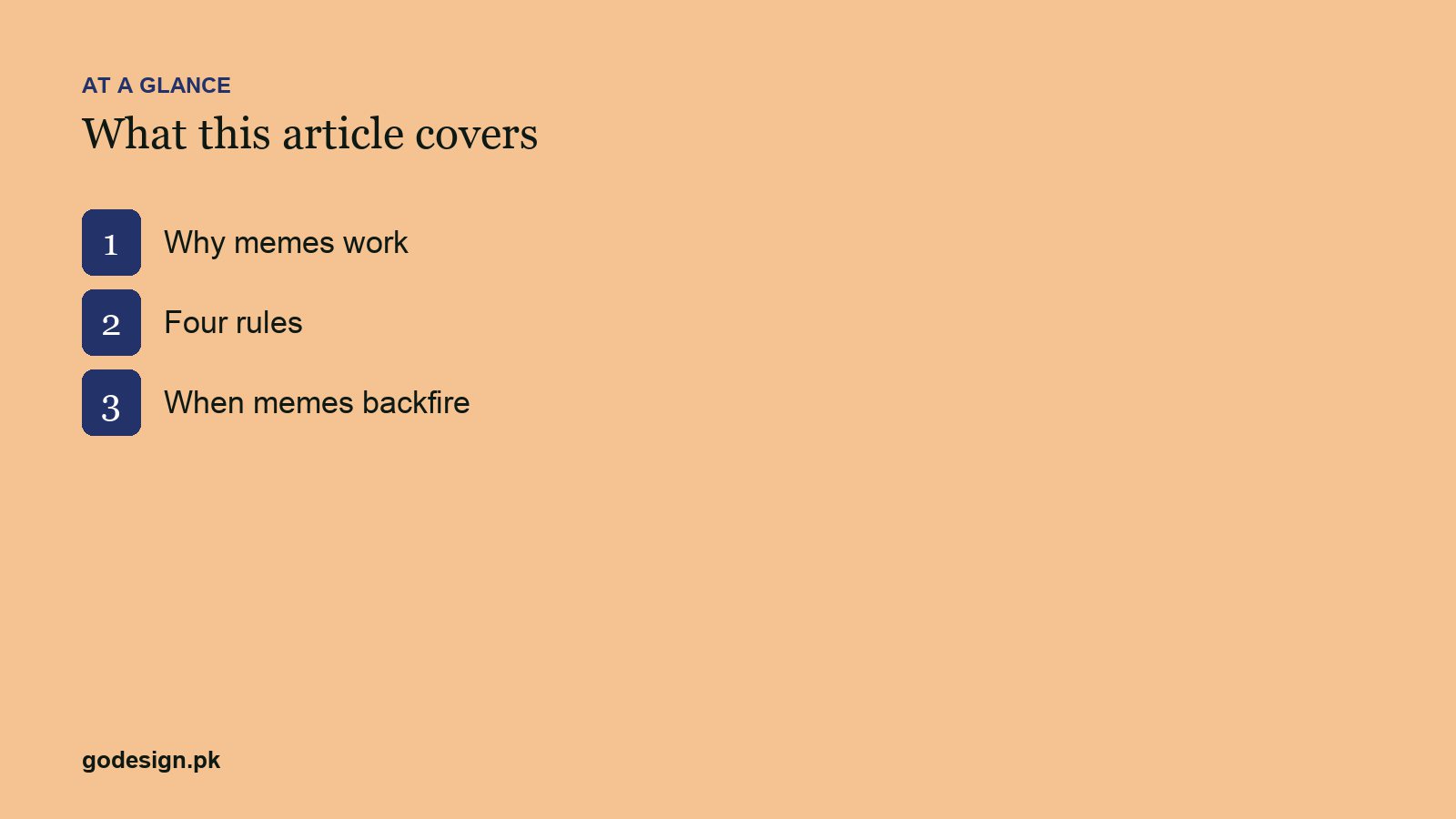
Why do memes work in marketing?
People share jokes with friends; they rarely share adverts. A meme that captures something your customers recognise gets sent on in DMs and WhatsApp groups, which puts your brand in front of people who do not follow you yet. That is reach you did not pay for.
Memes are also quick and cheap. A good one needs a format, an idea and a caption, and it can go from idea to post in an afternoon. And they make a brand feel run by people. An account that can laugh at the small frustrations of its own industry feels more approachable than one that only posts discounts.
Some well-known brands have built their social presence on this tone. Duolingo's owl mascot on TikTok and Wendy's sharp replies on X are the examples most marketers cite. Both work because the humour is consistent and clearly belongs to that brand, not because they post every trending format.
Do memes work for every brand?
No. They suit brands whose customers are already on Instagram, TikTok or X in a relaxed mood: food, fashion, retail, apps, education, gaming, local services and many consumer products. They also work for a founder's or team member's personal account in B2B, where a joke about the daily realities of the job can travel well.
They suit brands poorly where trust depends on seriousness: healthcare, legal, finance, funeral services and anything involving vulnerable customers. A clinic can be warm and friendly on social media without making jokes about symptoms. If you are unsure, our social media marketing myths post covers why not every brand needs to be on every platform, in every tone.
How to use memes in marketing: four rules
1. Know your audience
A meme that lands with university students embarrasses a brand that sells to procurement managers. Before borrowing a format, look at who follows you and what they share themselves. In Pakistan, jokes about cricket, load-shedding, wedding season, exam results and desi family life travel widely; niche internet formats from elsewhere often do not.
2. Make the joke your own
Reposting someone else's meme with your logo on it is content theft, and followers notice. Take the format and make it about your product, your customers' problems or your industry's habits. The best brand memes could only have come from that brand.
3. Post them in the right place
Instagram, TikTok, Facebook, X and WhatsApp channels or status are natural homes for memes. Your website homepage, proposals, invoices and paid ads aimed at cold audiences usually are not. Memes are conversation; keep them where conversation happens.
4. Get the timing right
A trending format lasts days, sometimes hours. A meme posted after the moment has passed reads as late, and late is worse than silent. If your approval process takes a week, either give one person the authority to approve light content on the day, or stay away from trends and stick to evergreen formats.
How to make a meme for your brand
- 01Write down five frustrations or funny truths your customers live with. These are your raw material.
- 02Pick a format your audience already knows. Check where it came from first, because some formats carry meanings you do not want.
- 03Write the caption in the voice your customers use with each other, not in marketing language.
- 04Make it on-brand without making it an advert: your colours or fonts can appear, but the product should not be shouted.
- 05Build it in Canva, CapCut or your design tool, using images you own or have licensed.
- 06Ask one person outside the marketing team whether they get it. If you have to explain it, do not post it.
- 07Post it, reply to the comments in the same tone, and note how it performs against your normal posts.
Our social media design guidelines cover sizes, safe areas and brand consistency for the visual side.
Where to post memes
| Channel | Fit for memes | Notes |
|---|---|---|
| Instagram (feed, Reels, Stories) | Strong | Carousels and Reels with trending audio do well; Stories suit quick reactions |
| TikTok | Strong | Video formats and sounds change fast; timing matters most here |
| Good | Works well for local and family-oriented audiences in Pakistan | |
| X | Good | Text and reply humour; fast-moving |
| WhatsApp channels and status | Good | Shares easily into groups |
| Careful | Better on personal accounts than on the company page | |
| Website, proposals, cold ads | Poor | Readers want clarity and proof here, not jokes |
When memes backfire
- Jokes about news, politics, religion or tragedy. In Pakistan these can cause serious offence, and online content falls under the Prevention of Electronic Crimes Act (PECA). Stay well clear.
- Formats whose origin the team did not check, which turn out to carry an offensive meaning.
- Memes that mock customers rather than laughing with them.
- A sudden switch from a formal tone to memes, which reads as insincere.
- Too many memes, until the account looks like a meme page and nobody remembers what you sell.
Are memes legal to use in marketing?
Often not as freely as people assume. Many meme templates are copyrighted photographs or film stills, and using them to promote a business is commercial use, which is different from a person sharing a joke. Using a recognisable person's face to sell something can also raise image rights problems.
The safe approach is to use formats you create yourself, stock images you have a licence for, or your own team and products in the picture. Our post on design copyright covers the basics of using images you do not own.
How to tell if your memes are working
Likes are a weak signal. Look at shares and sends, saves, comments that tag friends, reach among people who do not follow you and new followers in the days after a post. If memes get reach but enquiries and sales do not move over a few months, they are entertaining your audience without selling to it, and the mix needs more product content alongside them. Our guide to campaign optimisation for lead generation covers tracking the steps from post to enquiry.
Common questions
- What is meme marketing?
- Meme marketing is using a familiar internet joke format, such as a captioned image, reaction GIF or trending audio, to say something about your brand or customers. It aims for shares and personality rather than direct selling, and it works best as a small part of a wider social media plan.
- Do memes help increase sales?
- Indirectly. Memes mainly bring reach and make a brand more likeable, which can lead to more followers and enquiries over time. If reach grows but enquiries do not, balance the memes with product posts, reviews and offers.
- Are memes effective for B2B marketing?
- On personal LinkedIn or X accounts, often yes, because a joke about the realities of a job travels well among people in that job. On the company page and in sales material, rarely, because B2B buyers are looking for clarity and proof there.
- Can using a meme get a brand into legal trouble?
- It can. Many meme images are copyrighted photographs or film stills, and using a person's likeness to promote a business can raise image rights issues. Use formats you make yourself, licensed images or your own team and products.
- How often should a brand post memes?
- As a minority of posts. If every post is a joke, the account becomes a meme page and people forget what you sell; occasional memes keep the tone light while product and proof posts do the selling.
- Should small businesses in Pakistan use memes?
- Many can, especially in food, retail, fashion, education and local services where customers are on Instagram, TikTok and Facebook. Keep jokes local and relatable, and avoid politics, religion and tragedy entirely.