
What brand experience is
The sum of every interaction, not the logo. A beautiful identity attached to slow replies and a confusing checkout is a bad brand experience with good graphics. The factors that shape it: visual identity, tone of voice, product quality, service speed, the website and store, packaging and delivery, and how problems are resolved.
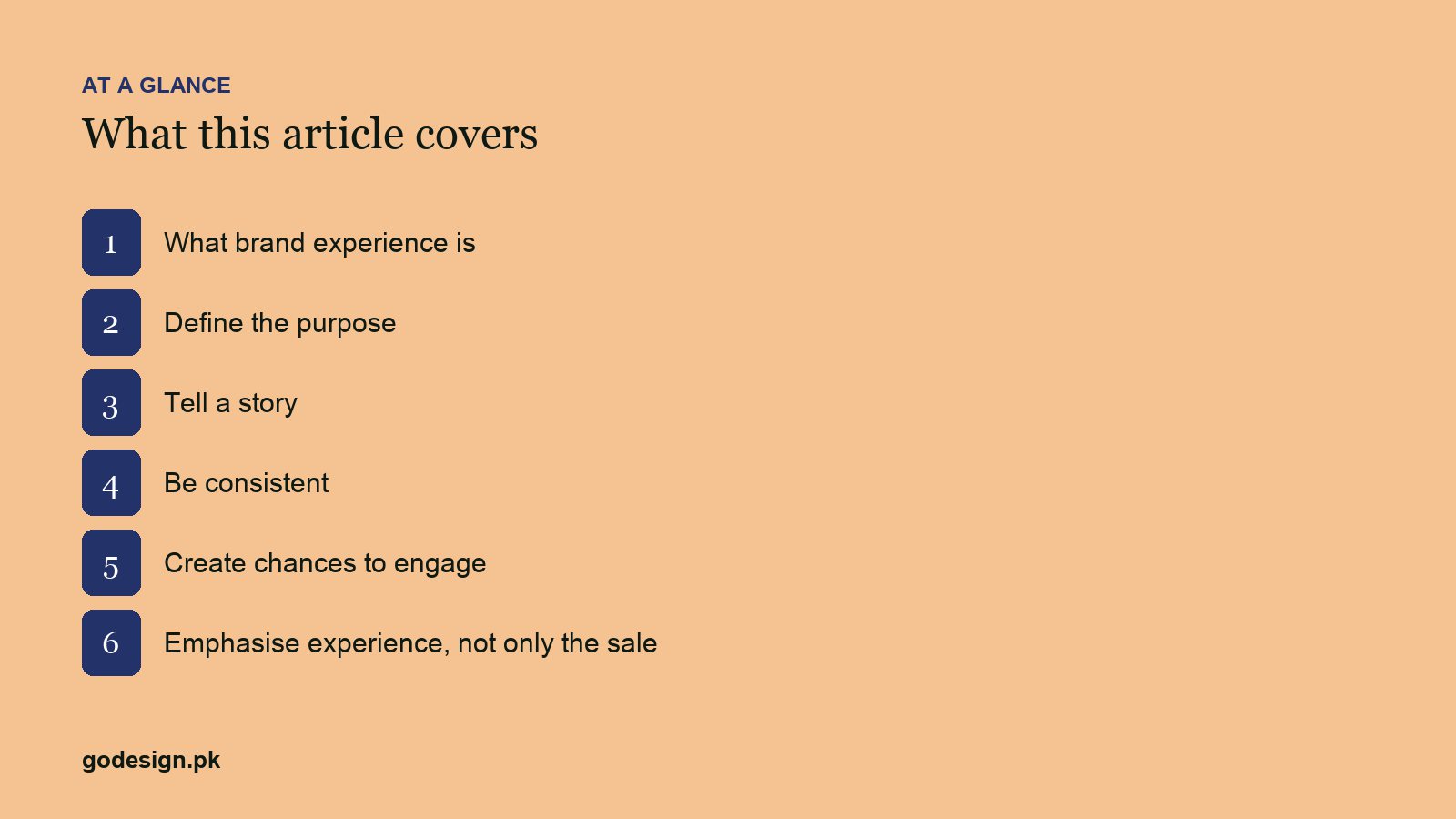
1. Define the purpose
Why the business exists beyond making money, in one sentence a customer could repeat. Purpose guides every later decision and gives customers a reason to prefer you when price is equal. It does not need to be grand; "honest car repair with no upselling" is a purpose.
2. Tell a story
Where the business came from, who runs it, what it believes. People remember stories and forget feature lists. Put it on the about page with real photos, as we do on our company page, and repeat it in packaging inserts, email footers and social profiles.
3. Be consistent
Same colours, same tone, same standards, from the Instagram post to the invoice to the phone manner. Consistency is the mechanism by which experiences become a brand. A brand guide and a social media design guide are how it survives staff changes.
4. Create chances to engage
Reply to comments, answer WhatsApp quickly, ask for feedback after delivery, run a small loyalty scheme, feature customers. Engagement turns buyers into people who talk about you. Automation helps here: a CRM and WhatsApp flows that send the right message at the right time, without a person remembering to.
5. Emphasise experience, not only the sale
The unboxing, the thank-you note, the clear tracking email, the easy return. The sale is one moment; the experience around it decides whether there is a second sale and a referral. Design the after-purchase journey with the same care as the product page.
| Touchpoint | Question to ask |
|---|---|
| Website | Can a stranger tell what we do and why in ten seconds? |
| First reply | How long, and does it sound like us? |
| Purchase | Is checkout as easy as the best store we use? |
| Delivery | Does the package feel like the brand? |
| Problem | Is a complaint handled in a way we would be proud to publish? |
| Follow-up | Do customers hear from us after the sale, usefully? |
Common questions
- What is the difference between brand identity and brand experience?
- Identity is what you design: logo, colours, type, voice. Experience is what customers feel across every interaction, of which identity is one part. Good identity with poor service is a poor brand experience.
- How can a small business improve brand experience cheaply?
- Reply faster, write a clear about page with real photos, standardise the packaging and email templates, and ask for feedback after every sale. None of these cost much; all of them are noticed.
- Does brand experience affect SEO?
- Indirectly and strongly. Reviews, repeat visits, branded searches and time on site all follow from good experience, and all feed search visibility.