What is marketing through social media?
Marketing through social media means using platforms such as Facebook, Instagram, TikTok, LinkedIn, YouTube and WhatsApp to reach people who might buy from you, keep existing customers coming back and give both groups an easy way to contact you. It has two halves: organic content you post for free, and paid ads that put your content in front of a chosen audience.
For a small business the goal is rarely "go viral". It is usually more enquiries, more repeat orders or more people walking in, and every decision about what to post should trace back to one of those.
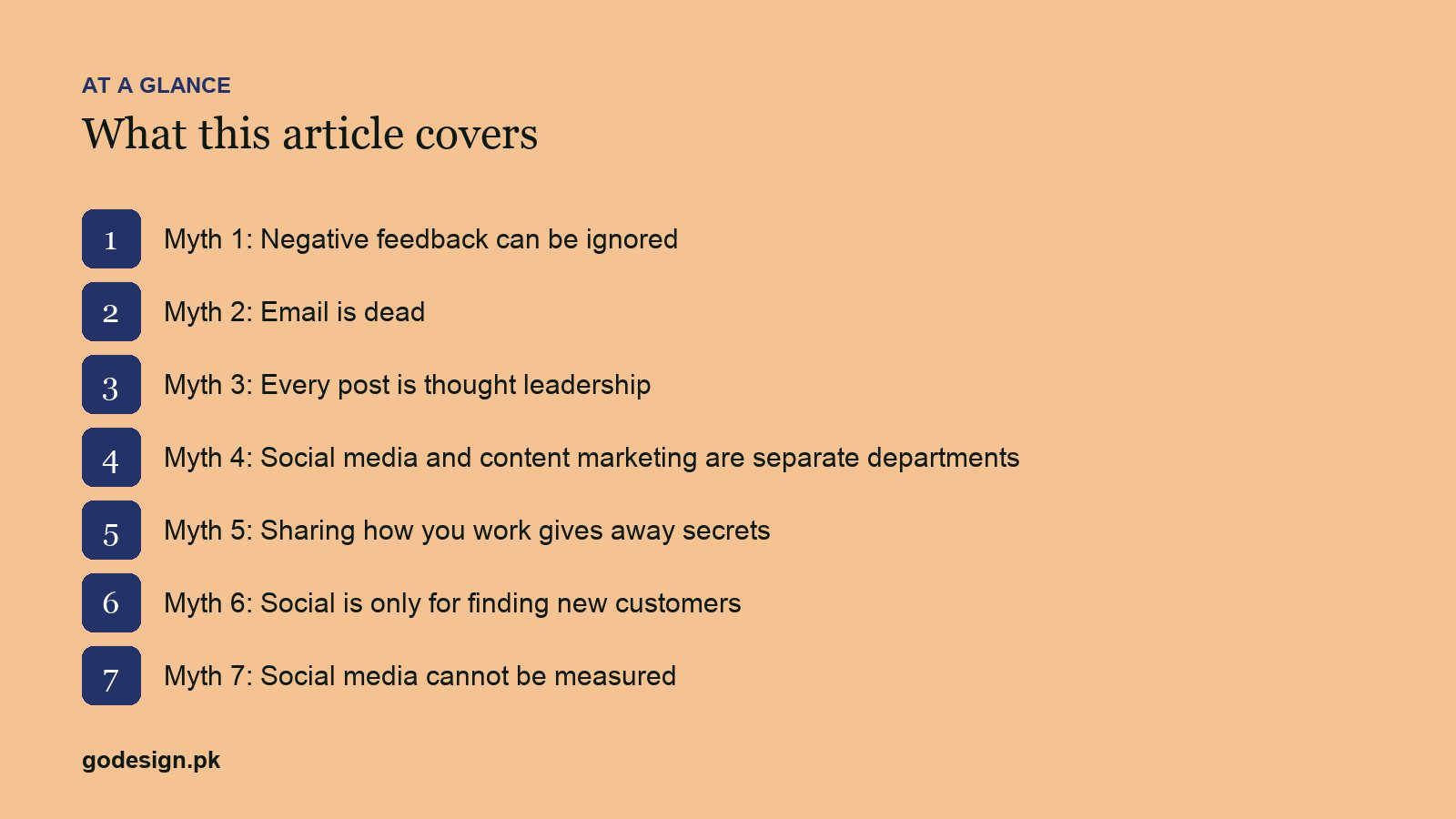
7 social media marketing myths
Myth 1: Negative feedback can be ignored
A complaint answered well is one of the most persuasive things a prospect can read. Ignored, it sits under your posts and in your reviews for anyone checking you out. Reply within a day, in public, without getting defensive, and move the details to a private message or a phone call. Never delete fair criticism: people notice, and screenshots last longer than posts. The same rule applies to Google reviews, which matter more for local search than any post you publish.
Myth 2: You need to be on every platform
Five half-maintained accounts look worse than one active one. A dormant page with a last post from two years ago makes customers wonder whether you are still open. Pick the platform your customers already use, post there consistently, and add a second only when the first runs without effort.
Myth 3: More followers means more sales
Followers are a vanity number unless they are the right people. Meta itself moved Facebook Pages away from showing "likes" and towards followers, and neither figure tells you who bought anything. A bakery with 2,000 local followers who order on WhatsApp is doing better than one with 50,000 followers from a giveaway. Bought followers are worse than useless: they drag down engagement, so the platform shows your posts to fewer real people.
Myth 4: Email is dead
An email list belongs to you; a following belongs to the platform. When reach drops or an account gets locked, the list still works. For most businesses, social builds the audience and email or WhatsApp turns it into repeat sales. If you have followers and no list, you are building on rented land. Add a sign-up offer to your profile link from day one.
Myth 5: Social media marketing is free
Posting is free; results are not. Organic reach on business pages is limited, so most consistent results come from a mix of regular posts and a small, steady ad budget. The bigger hidden cost is time: planning, photos, captions, replies and reporting. Count that time honestly, or pay someone to do it.
Myth 6: Social is only for finding new customers
For many service businesses social media is better at keeping existing customers warm than at finding strangers: reminding them you exist, prompting repeat orders, collecting reviews and making referrals easy. Measure it that way and the numbers often make more sense. A post that brings back ten previous customers can be worth more than one that reaches 10,000 people who will never buy.
Myth 7: Social media cannot be measured
It can, if you set it up before you post. Without the setup the myth comes true, which is why so many owners give up on social after six months of guessing. The next sections cover what to track.
What works instead: a simple plan for a small business
- 01Write down one goal for the next three months, such as 30 enquiries a month or 20 repeat orders, and one platform to reach it.
- 02Fill in the profile properly: clear photo or logo, one-line description, location, hours, WhatsApp button and a link to your website.
- 03Set up Google Business Profile at the same time. It is not social media, but for local businesses it often brings more calls than any social account.
- 04Plan content in themes you can repeat: your products or work, how you do it, customer results (with permission), answers to common questions, and offers.
- 05Post on a schedule you can keep for months. Consistency matters more than volume.
- 06Put a small, steady budget behind your best posts, and try click-to-WhatsApp ads if your customers prefer to chat.
- 07Reply to every comment and message the same day. On social media, slow replies lose sales.
- 08Review the numbers monthly and change one thing at a time.
Turn one piece of work into several posts. A blog article becomes a carousel, a short video, a WhatsApp broadcast and a newsletter section. Content and social media are one job, not two departments. Design consistency helps too; our social media design guidelines explain how to set them up.
How to measure social media marketing
- Add UTM tags to every link you post, so Google Analytics 4 shows which platform and which campaign sent each visitor.
- Set up key events in GA4 for the actions that matter: form submissions, WhatsApp clicks, calls and purchases.
- Ask every new customer how they found you, and record the answer in your CRM or even a spreadsheet.
- Use Meta Business Suite or each platform's own insights for reach, saves, shares and messages, but judge success on enquiries and sales.
- Track cost per enquiry for paid posts and compare it with your other channels before increasing the budget.
Once tracking is in place, the question changes from "is social media working?" to "which posts and which audience bring paying customers?", which is a question you can actually answer. For paid campaigns, our guide to campaign optimisation for lead generation in Pakistan goes further.
Which platforms suit businesses in Pakistan?
| Platform | Best for | What to post |
|---|---|---|
| Broad consumer audiences, local groups, older customers | Offers, photos, short videos, events | |
| Fashion, food, beauty, interiors, anything visual | Reels, carousels, stories with WhatsApp links | |
| WhatsApp Business | Conversations, orders, repeat customers | Catalogue, broadcast lists, status updates |
| TikTok | Younger audiences, products that demo well | Short vertical videos, behind the scenes |
| B2B services, recruitment, professional firms | Case studies, expertise, company news | |
| YouTube | Products that need explaining, tutorials | How-to videos, reviews, longer demos |
Start with the one your best customers already use. Ask them; it takes a week of asking and saves months of posting in the wrong place.
Common questions
- What is marketing through social media?
- It is using platforms such as Facebook, Instagram, TikTok, LinkedIn and WhatsApp to reach potential customers, keep existing ones engaged and make it easy for both to contact you. It combines free organic posts with paid ads aimed at a chosen audience.
- What are the biggest social media marketing myths?
- That negative feedback can be ignored, that you must be on every platform, that followers equal sales, that email is dead, that social media is free, that it is only for new customers and that it cannot be measured. Each leads businesses to spend time or money in the wrong place.
- Which social platform is best for a small business in Pakistan?
- Whichever your customers already use. For most consumer businesses that is Instagram and Facebook, with WhatsApp for the actual conversations; for B2B it is LinkedIn. Google Business Profile is not social media but often matters more for local customers.
- How often should a business post on social media?
- As often as it can keep up without padding. A few good posts a week on a steady schedule beat a burst of daily posts followed by silence.
- Should I respond to negative comments?
- Yes, publicly and promptly, with an acknowledgement and an offer to sort it out privately. Deleting or ignoring fair criticism is noticed by everyone else reading.
- Is it worth buying followers?
- No. Bought followers do not buy from you, and because they never engage, the platform shows your posts to fewer of your real followers. Spend the same money on ads aimed at people in your area.