1. Colour palette generation (Khroma, Coolors)
Train the tool on colours you like and it proposes palettes with contrast data. Good for exploring options fast. The decision about which palette suits the brand remains yours, as does checking cultural fit for the markets you sell into.
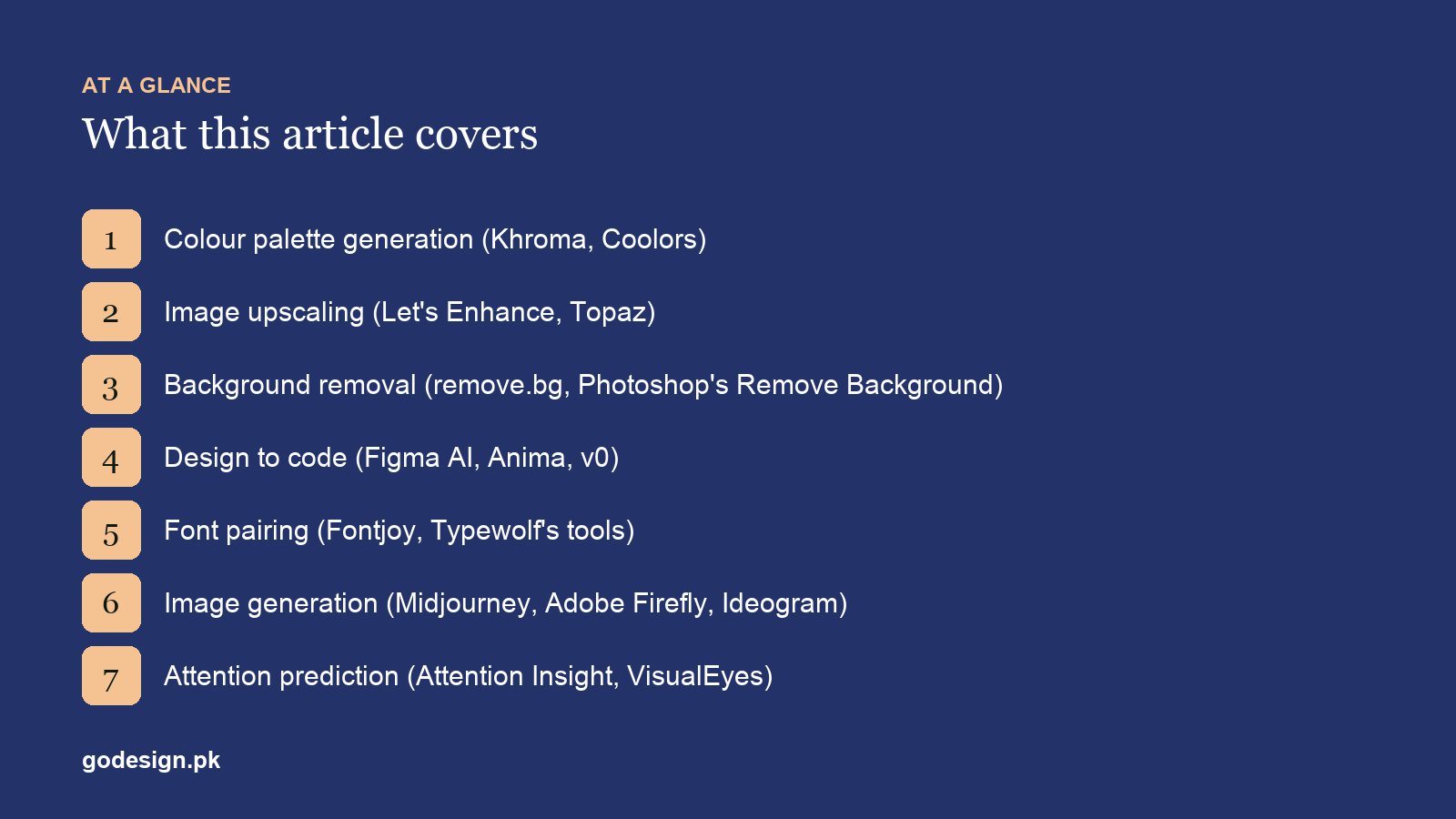
2. Image upscaling (Let's Enhance, Topaz)
Turns a 600px client logo or product photo into something printable. Genuinely useful for the low-resolution assets every client sends. It cannot invent detail that was never there, so check output at 100% before sending to print.
3. Background removal (remove.bg, Photoshop's Remove Background)
Seconds instead of minutes per product photo. Essential for ecommerce catalogues. Hair, glass and transparent objects still need a manual pass.
4. Design to code (Figma AI, Anima, v0)
Generates layout code from a design or a prompt. Fine for prototypes and first drafts; production code from our developers is still cleaner, more accessible and easier to maintain, which matters for the client three years later.
5. Font pairing (Fontjoy, Typewolf's tools)
Suggests heading and body combinations that work. Useful when you need a starting point; the pairing still has to suit the brand and be licensed for the use.
6. Image generation (Midjourney, Adobe Firefly, Ideogram)
Concept art, mood boards, placeholder imagery and, with care, final illustrations. Firefly's training data makes it the safer choice for commercial work. We do not use generated images to fake products, people or places a client does not have.
7. Attention prediction (Attention Insight, VisualEyes)
Predicts where eyes land on a layout before you test with people. A useful sanity check on hierarchy; not a substitute for watching five real users.
8. Mockup automation (Smartmockups, Mockup AI)
Places a logo or screen onto hundreds of product and device scenes instantly. Speeds up the presentation of brand work, as in our rebranded case study, where mockups sold the identity to the client.
Sources
- Figma Config 2026 recap (Figma blog and help centre), June 2026.
- Tool capabilities as documented by their vendors in September 2026. Products in this category change monthly; treat names as examples of a type.
Common questions
- Will AI replace graphic designers?
- It has replaced some production tasks, such as background removal and resizing, and it speeds up exploration. The work of understanding a business and deciding what its brand should communicate has not been automated, and clients pay for that part.
- Is it safe to use AI-generated images commercially?
- It depends on the tool's licence and training data. Adobe Firefly is designed for commercial use; others carry more risk. Never use generated images to depict real products, staff or premises the client does not have.
- Which AI tool should a beginner designer learn first?
- Background removal and upscaling, because they solve problems every client project has, and Figma's built-in AI features, because Figma is where most design work happens.