1. Figma
The standard for UI, web design and increasingly for presentations and social templates. Browser-based, collaborative, with components, prototyping and a plugin ecosystem. Free tier for individuals. Every GoDesign web project starts here; the S-Line platform was designed and revised entirely in Figma with the client commenting live.
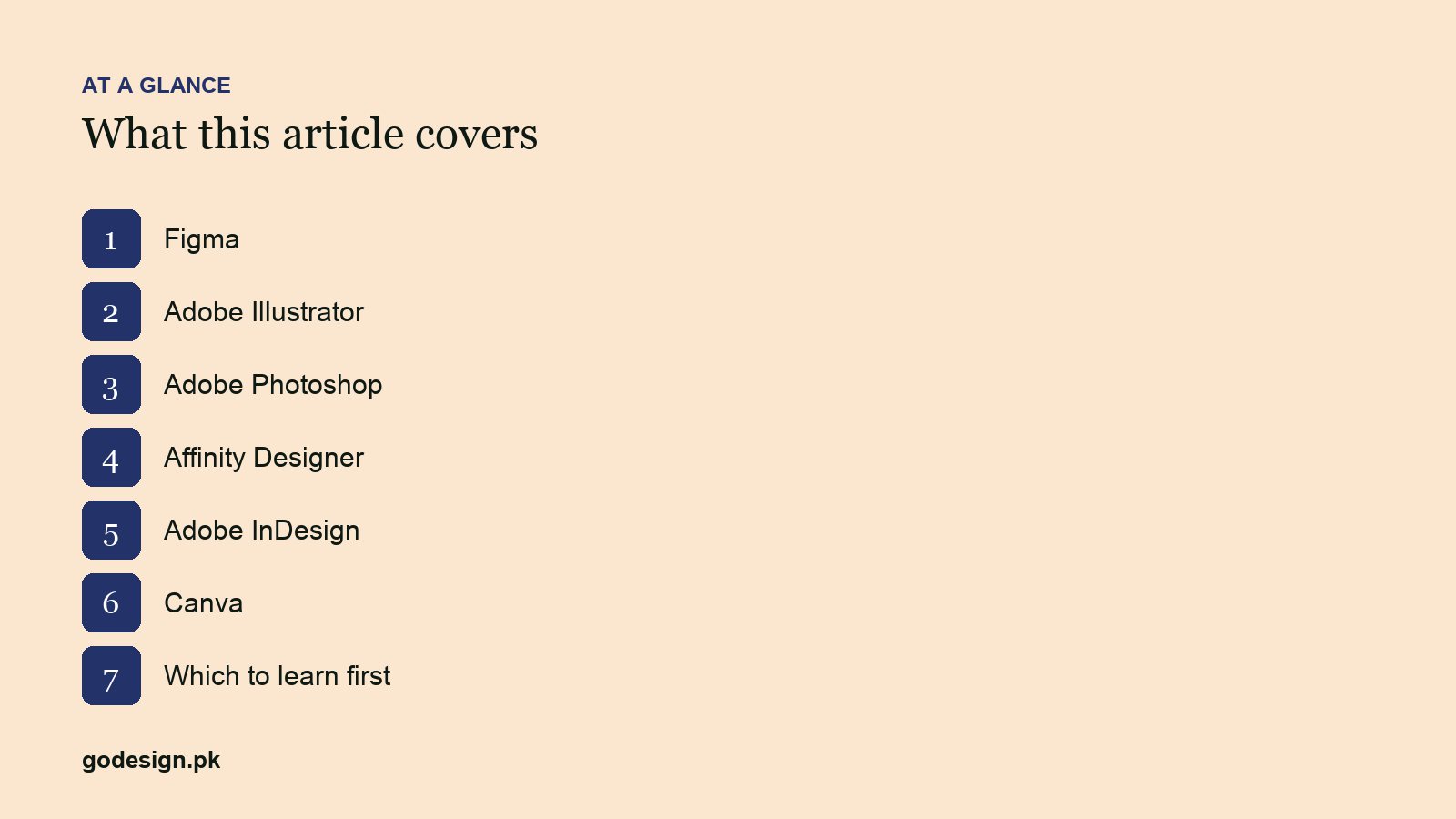
2. Adobe Illustrator
Vector drawing: logos, icons, illustration, print layouts. Still unmatched for precise vector work and for the file formats printers and sign-makers expect. Subscription via Creative Cloud. Our logo work, including the rebranded identity, is built here.
3. Adobe Photoshop
Photo editing, compositing, mockups and raster effects. Generative fill has made retouching and extending images far faster. Subscription. Needed for product photography, hero images and realistic brand mockups.
4. Affinity Designer
A one-time-purchase vector and raster tool that covers most of what Illustrator and Photoshop do for designers who do not want a subscription. Strong choice for freelancers in Pakistan watching dollar costs. Fewer plugins and less industry-standard file interchange.
5. Adobe InDesign
Multi-page layout: brochures, company profiles, catalogues, books. If the deliverable is a PDF with more than a few pages, this is the tool. Subscription.
6. Canva
Template-based design for non-designers and fast social content. Not a professional design tool, but the right tool for a client's marketing team to produce on-brand posts from templates a designer set up. We hand over Canva brand kits with most identity projects.
| Tool | Best for | Cost model |
|---|---|---|
| Figma | UI, web, prototypes | Free tier, paid seats |
| Illustrator | Logos, vectors, print | Subscription |
| Photoshop | Photos, mockups | Subscription |
| Affinity Designer | Vector and raster without subscription | One-time |
| InDesign | Multi-page print | Subscription |
| Canva | Templates, non-designers | Free tier, paid |
Which to learn first
Web or product design: Figma, then Photoshop for imagery. Brand and print: Illustrator, then InDesign. On a tight budget: Figma (free) plus Affinity Designer (one payment) covers almost everything. Learn one deeply before adding another; the beginner principles matter more than the tool count.
Sources
- Figma Config 2026 recap, June 2026.
- Pricing and feature notes as published by each vendor in September 2026.
Common questions
- Is Figma better than Adobe XD?
- Adobe discontinued active development of XD after the Figma acquisition attempt fell through, and the industry has consolidated on Figma. Learn Figma.
- Can I do professional design work without Adobe?
- Yes. Figma plus Affinity Designer and Affinity Photo cover UI, vector and raster work. You will occasionally need to convert files for printers or agencies that expect Adobe formats.
- Is Canva good enough for a business's branding?
- For producing day-to-day content from templates, yes. For creating the brand identity, logo and system in the first place, no; that needs a vector tool and a designer.